 Support Helpline: 0333 456 5776


 99 Facebook reviews

Veranda vs Pergola: What’s the Difference & Which Is Better for Your Home?
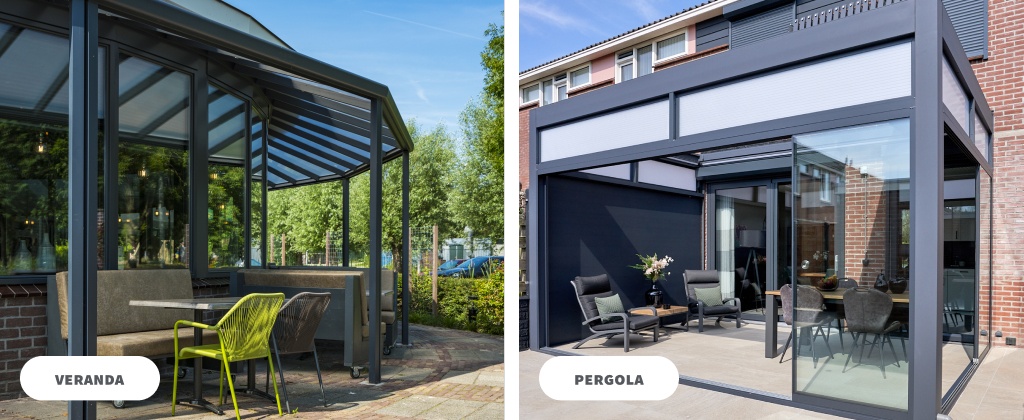
A veranda and a pergola might look similar at first glance, but they are built for very different purposes. One gives you a covered outdoor space you can use all year round, while the other is designed mainly for shade on sunny days.
Choosing the wrong one can mean investing in a structure that sits unused for much of the year. So before you decide, it is worth understanding exactly what sets the two apart.
In this guide, we break down what each structure is, how they compare, and which option tends to work best for UK homes.
What is a Veranda?
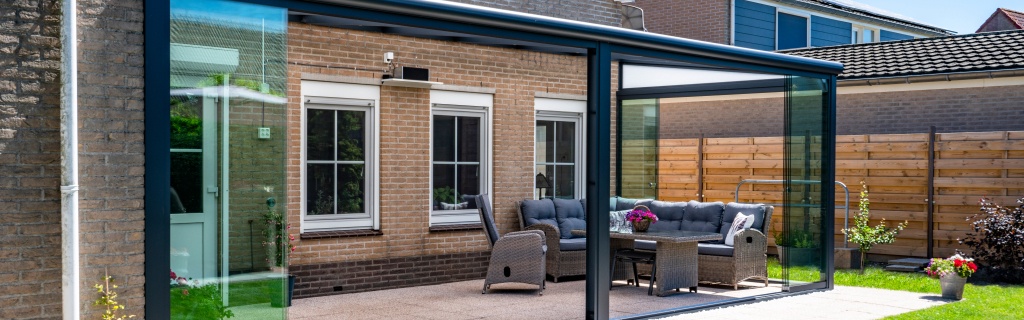
A veranda is a roofed outdoor structure attached to the exterior of a home, typically supported by posts or columns, that provides a covered and sheltered space between the house and garden.
The roof is solid or glazed, which means it keeps out rain and provides shade from direct sunlight. That makes it a practical choice for UK homes, where the weather can change quickly. Unlike more open structures, a veranda can be used comfortably in a range of conditions throughout the year.
Most modern verandas are built from aluminium, which is strong, weather-resistant and requires very little upkeep compared to timber. Many systems are designed specifically for UK conditions, with features such as glass side panels, sliding doors, integrated lighting and heating to make the space more comfortable and usable throughout the year.
Systems like Deponti are a good example of this, offering a range of customisable options designed for everyday use.
Key features of a veranda:
- Attached directly to your home
- Solid or glazed roof for full weather protection
- Suitable for year-round use in UK conditions
- Typically made from low-maintenance aluminium
- Can be customised with sides, lighting and heating
So how does a pergola compare?
What is a pergola?
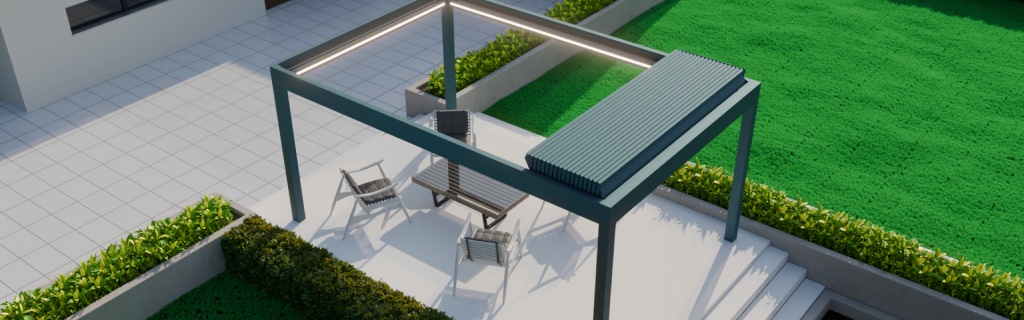
A pergola is an open outdoor structure, typically with a slatted or partially covered roof, designed to provide shade and define an outdoor space rather than offer full weather protection.
It can be freestanding in the garden or fixed to a wall. Pergolas are commonly used to frame a seating or dining area and can look striking in the right garden, particularly in larger or more open outdoor spaces where they add structure and character.
Unlike a veranda, a pergola does not fully protect from rain. Even modern designs with adjustable louvred roofs, which allow you to control light and airflow, cannot match the consistent protection of a solid or glazed roof. In the UK, where dry weather cannot always be relied upon, that is worth factoring into your decision.
Key features of a pergola:
- Freestanding or wall-mounted structure
- Open or slatted roof design
- Designed mainly to provide shade
- Available in timber, aluminium or steel
- Some modern designs include adjustable louvred roofs
A pergola works well as a seasonal garden feature, but it is generally better suited to occasional use rather than an everyday outdoor living space.
What is the main difference between a veranda and a pergola?
The main difference between a veranda and a pergola is straightforward. A veranda is attached to your home and has a solid or glazed roof that provides full weather protection. A pergola is an open or slatted structure designed primarily to provide shade.
In practical terms, a veranda can be used throughout the year regardless of conditions. A pergola cannot offer the same consistency, which in the UK has a direct impact on how often it gets used.
The table below gives a clear side by side comparison of both structures across the factors that matter most.
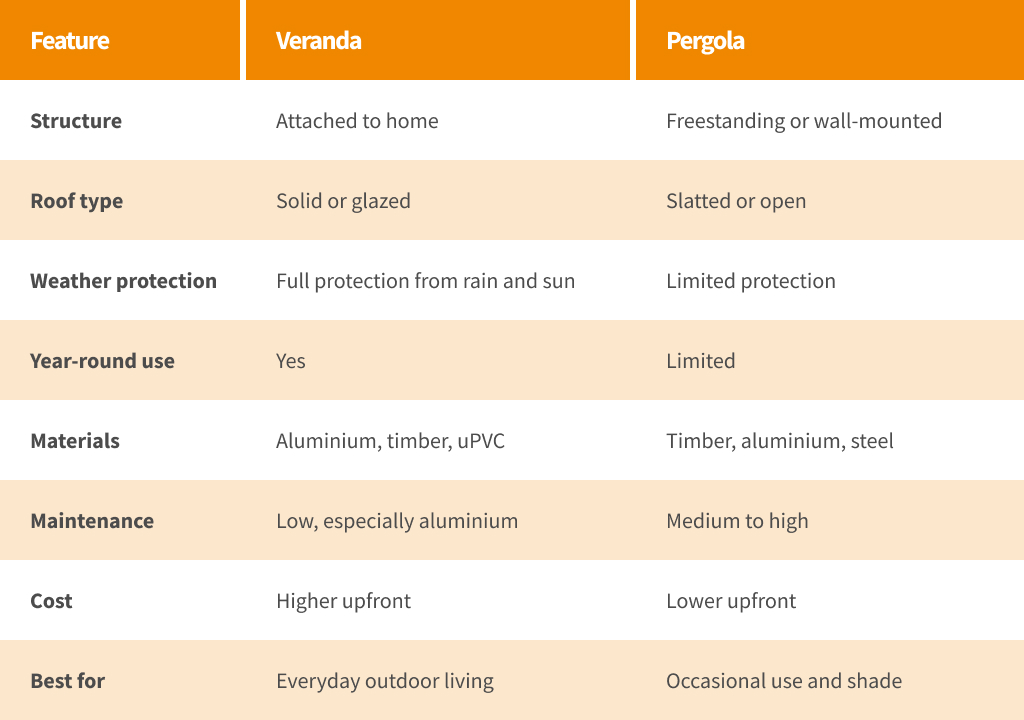
For homeowners who want a space they can use regularly, a veranda has a clear practical advantage. Modern aluminium verandas in particular are designed for year-round use, with low maintenance requirements and the flexibility to add features like glass sides, heating or integrated lighting.
A pergola can work well as a stylish garden feature or a shaded area for warmer days. For everyday outdoor living though, the lack of full rain protection is a significant limitation in the UK climate.
With the key differences covered, it is worth looking at how each structure performs across the specific factors that matter most when making your decision.
Which is right for your home?
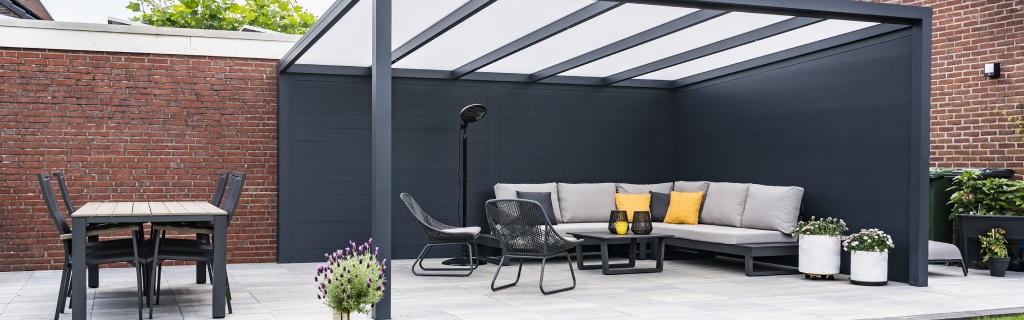
Understanding the differences is one thing. Knowing which option actually suits your home and how you plan to use the space is another. The best way to approach it is to think about what matters most to you day to day.
How it connects to your home
A veranda is attached directly to your house, so it feels like a natural extension of your living space. You can step straight outside into a covered area without thinking about the weather. A pergola is usually positioned elsewhere in the garden, which can look great but feels more like a separate feature than part of the home.
Weather protection
A veranda gives you full cover from both rain and sun, so you can use the space whatever the conditions. A pergola provides shade on sunny days but does not offer the same level of protection when the rain arrives.
How often you will use it
A covered structure will always get more use throughout the year. A pergola is better suited to occasional use, mainly during warmer and drier weather, whereas a veranda can be used comfortably in every season.
Maintenance
Modern aluminium verandas are designed to be long-lasting and low maintenance. Timber pergolas can require more upkeep over time, particularly in damp conditions.
Cost and long-term value
Pergolas are typically cheaper upfront. A veranda costs more to install but tends to offer better long-term value because it becomes a space you use regularly rather than one reserved for sunny days.
To make the decision a little clearer, here is a simple way to break it down:
A veranda may be right for you if:
- You want to use your outdoor space all year round
- You need protection from rain as well as sun
- You want something low maintenance
- You are looking to add long-term value to your home
A pergola may be right for you if:
- You want a decorative garden feature
- You mainly use your garden in summer
- Budget is your main priority
- You prefer a freestanding structure
For most UK homeowners, a veranda tends to be the more practical long-term investment. If year-round usability matters to you, it is worth exploring what an aluminium veranda could look like for your home.
Why aluminium verandas are a popular choice in the UK
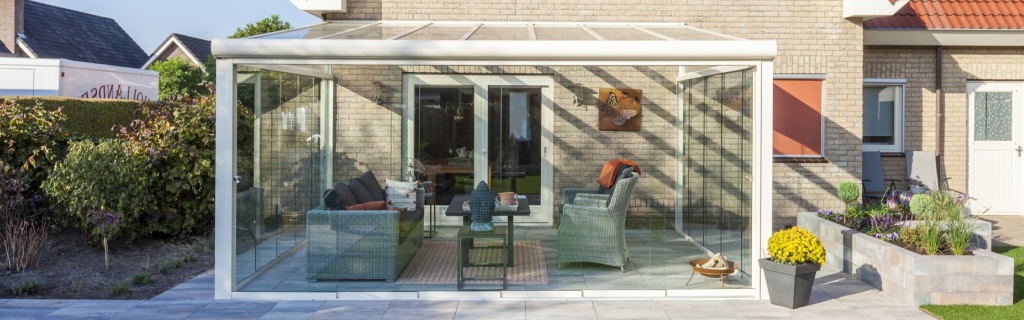
Aluminium verandas have become increasingly popular across the UK because they offer a practical way to make better use of outdoor space throughout the year.
The material itself plays a big part in this. Compared to timber, aluminium is designed to handle changing weather conditions while requiring very little upkeep.
Key benefits of aluminium verandas:
- Full weather protection
A solid or glazed roof means you can sit outside comfortably in both sun and rain. - Low maintenance
Aluminium does not rot, warp or require regular treatment. - Long-lasting
Built to withstand changing UK weather conditions and perform well over time. - Customisable
Options such as glass side panels, sliding doors and integrated lighting allow you to tailor the space to your home. - Year-round usability
With the right additions, the space can be used comfortably in every season.
For homeowners looking to get more from their outdoor space, systems like Deponti are a good example of this, offering flexible, customisable aluminium verandas designed for everyday use.
Explore our aluminium veranda range
If you are looking for a covered outdoor space you can use all year round, we supply and install high-quality aluminium verandas, including the Deponti range, designed to suit UK homes and weather conditions.
Get in touch today for a free no-obligation quote and find out what could work for your home.

 Opening Times: Mon - Fri: 9am - 5pm | Sat: 9am - 12pm
 Opening Times: Mon - Fri: 9am - 5pm | Sat: 9am - 12pm